What to put on your face after a chemical peel is a short list: a gentle cleanser, the bland moisturizer your provider approves, and sunscreen. That is it for the first several days. Once the peeling has finished and your provider clears you for regular skincare, usually somewhere between day 5 and day 14 depending on the depth of the peel, you can add a fragrance-free recovery oil and a barrier cream, and only later your actives.
First rule: your provider’s aftercare instructions outrank everything on this page. Peels range from a light lactic acid refresh to a medium-depth TCA peel, and the recovery window and the products allowed differ accordingly. This guide is the general shape of those two weeks, written so you understand why the instructions say what they say. Where the two disagree, follow the sheet you were handed.
What happens to skin after a chemical peel
A chemical peel applies an acid at a controlled strength to loosen and lift the outermost layers of skin on purpose, so that fresher, smoother-looking skin comes through underneath. For the first day or two the surface looks tight, pink, and slightly shiny. Peeling, when it comes, usually starts around day two or three, is heaviest around days three to five, and finishes by about day seven for a light peel and closer to day ten to fourteen for a deeper one.
During that window your skin barrier, the wall of cells and lipids that holds water in and keeps irritants out, is temporarily thinner than usual. That is why everything stings, why the sun matters more than ever, and why the aftercare list is so short. The skin is doing the work; the products are there to keep it comfortable and protected, not to do more.
The hour in the chair is the treatment. The fourteen days after it are where the result is kept or lost.
What to put on your face after a chemical peel: day by day
These stages are typical for a light-to-medium peel. Your provider may shift the dates in either direction.
Days 0 to 2: cleanse, moisturize, protect
- Cleanser: the gentle, non-foaming one your provider recommends, with lukewarm water and fingertips. Some providers ask you to use water only for the first 24 hours.
- Moisturizer: whatever bland, fragrance-free cream or balm your provider specifies. Apply it as often as skin feels tight. Do not substitute anything, including products you love.
- Sunscreen: a mineral SPF 30 or higher every morning, reapplied if you are near a window or outdoors. Many providers also ask you to stay out of direct sun entirely for the first week.
- Nothing else. No serums, no oils, no makeup unless your provider has said otherwise, and no exfoliants of any kind.
Days 3 to 7: peeling, hands off
- Do not pick, pull, or scrub the peeling skin. Flakes lifted early leave uneven patches that take far longer to even out.
- Keep the same three products. Cleanser, the approved moisturizer, sunscreen. If the moisturizer is no longer enough for the tightness, ask your provider before adding anything.
- Skip the heat. Hot showers, saunas, steam, and workouts that make you sweat heavily all bother peeling skin.
- Makeup: once your provider allows it, a mineral powder or a fragrance-free tinted SPF is the usual first step.
Days 7 to 14: cleared for regular skincare
Once peeling has finished and your provider confirms the skin is intact, the recovery routine proper begins. This is the phase the OzoMD Reset Duo is built for.
- Cleanse gently, once a day, lukewarm water, no tools.
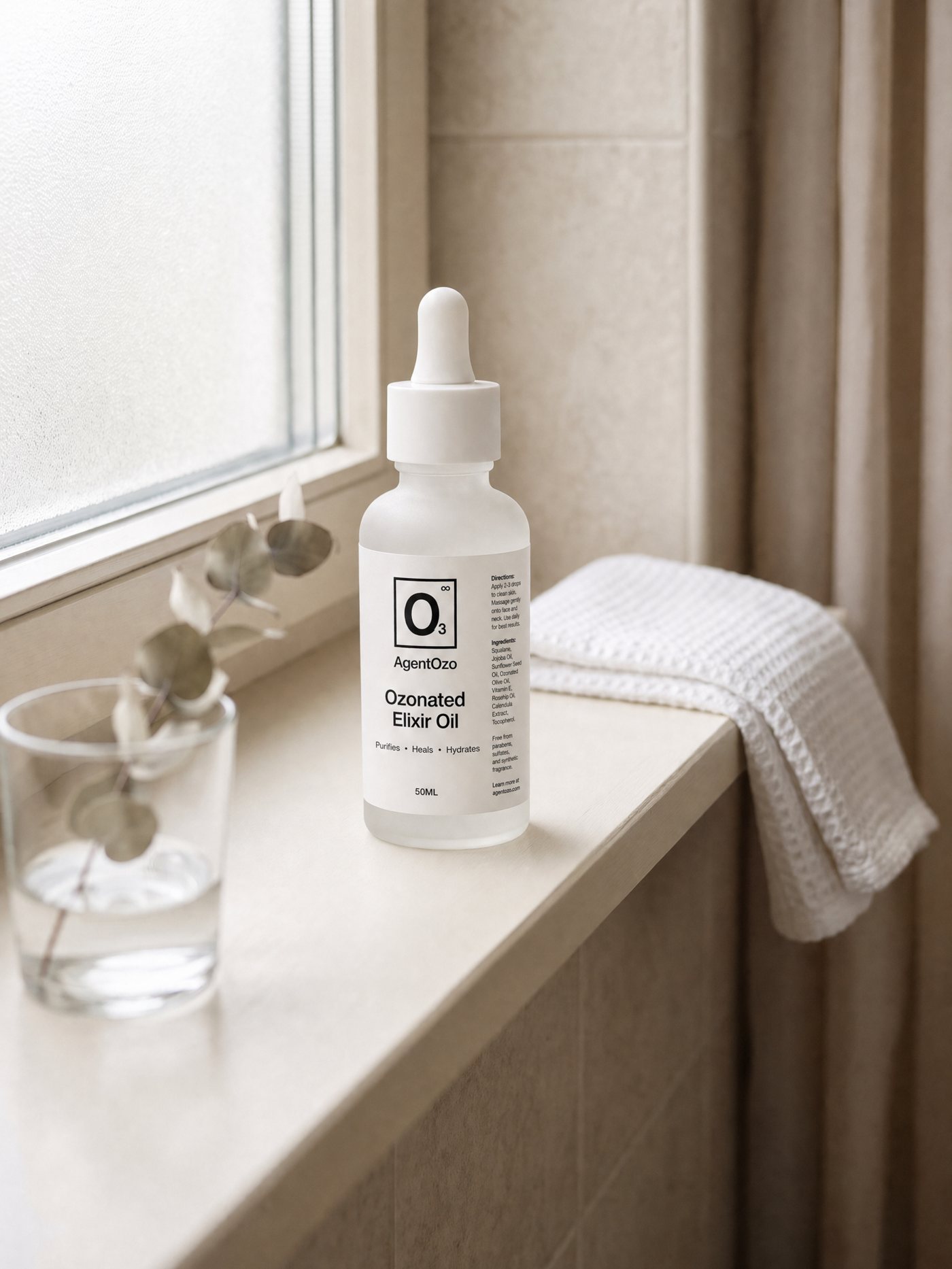
- Recovery oil at night. Two to three drops of OzoMD Ozonated Elixir Oil pressed into clean, slightly damp skin. Ozonated olive oil carried in squalane, jojoba, sunflower, and rosehip; fragrance free; non-comedogenic. Freshly peeled skin is thirsty for lipids, and the oil replenishes them without anything that tingles.
- Barrier cream, morning and night. OzoMD Ozonated Face Cream over the oil at night and under sunscreen in the morning. Niacinamide, panthenol, and hyaluronate support the look and feel of a barrier that has just been through a lot.
- SPF every morning, without exception, for at least four weeks after a peel. New skin is more sun-reactive than the skin it replaced.
Hold this routine, with no actives, until at least day 14 and ideally until the conditions in the retinol section below are met.
Can you use face oil after a chemical peel?
Yes, once your provider clears you for regular skincare, which is usually after peeling has finished and the surface is intact. Not before: in the first days an oil can sit on top of lifting skin and trap product underneath, and some oils sting on a surface that thin. When you are cleared, the oils commonly recommended are fragrance-free, non-comedogenic, and based on squalane or jojoba, lipids close to the skin’s own. OzoMD Ozonated Elixir Oil is built on exactly that base; if you are new to the ingredient, what ozonated olive oil is explains what the ozonation adds and why the oil has a brief, clean, metallic scent on contact. Skip essential oils, fragranced “facial oils”, and anything with retinol or acids blended in.
Two formulas for the days after the chair.
OzoMD Ozonated Elixir Oil and Ozonated Face Cream: physician formulated, fragrance free, non-comedogenic, made in the USA. For the moment your provider clears regular skincare.
Start Your ResetWhat to avoid after a peel
- Exfoliants of every kind: acids, scrubs, enzyme masks, cleansing brushes. The peel did the exfoliating.
- Retinoids, until your provider clears them (see below).
- Vitamin C at high strength and low pH, which stings on fresh skin.
- Fragrance and essential oils, in skincare, in “calming” balms, and in hair products that touch your face.
- Picking and peeling by hand.
- Heat: hot water, steam, saunas, heavy sweating.
- Sun without SPF, and direct sun at all in the first week.
- Waxing, threading, and dermaplaning on the treated area for at least two weeks.
- Swimming pools and hot tubs until your provider says the skin is intact.
- New products you have never used before. Peeled skin is not a testing ground.
When can you resume retinol and acids?
Only when your provider says so, and typically not before the peeling has fully finished and the skin has been comfortable, with no stinging, for about a week after that. For a light peel that often means around day 10 to 14; for a medium peel it can be three to four weeks. When you restart, do it the way you would after any barrier setback: one active at a time, one night a week, building slowly, with the recovery oil and cream on the nights in between. Our guide to ozonated oil and retinol covers how the two share a routine, and the damaged skin barrier guide explains what to watch for if you have moved too fast.
Skincare between facials and treatments: the maintenance routine
If peels, facials, microneedling, or laser are a regular part of your year, the days between appointments decide how much each one gives you. Skin that arrives at the next session replenished and calm lets your provider work with it instead of around it. The maintenance routine is the same four steps as days 7 to 14, kept permanently:
- Cleanse gently, once a day.
- Recovery oil at night, two to three drops.
- Barrier cream morning and night.
- SPF every morning.
Add actives on top only in the middle weeks between treatments, and pause them again for several days before your next appointment, or whenever your provider asks. That alternating rhythm is the logic behind skin cycling recovery nights, scaled up to a treatment calendar. Many people find the recovery oil also earns its place on hands, lips, and heels; the 2 fl oz bottle is the one most homes end up keeping within reach. For how the ingredient works and what we do not claim for it, see the science page.
One more time, because it matters: follow your provider’s aftercare first, and save this routine for the moment you are cleared for regular skincare. If anything looks unusual during recovery, call them; that is what the follow-up is for. OzoMD products are cosmetics that moisturize, replenish, and comfort the feel of skin; they are not a treatment.
Frequently asked questions
What should I put on my face after a chemical peel?
For the first several days: a gentle cleanser, the bland moisturizer your provider approves, and mineral sunscreen, and nothing else. Once peeling has finished and your provider clears regular skincare, add a fragrance-free recovery oil at night and a barrier cream morning and night, and keep SPF daily.
Can you use face oil after a chemical peel?
Yes, once your provider clears you for regular skincare, usually after peeling has finished. Choose a fragrance-free, non-comedogenic oil based on squalane or jojoba, such as OzoMD Ozonated Elixir Oil, and skip essential oils and any oil blended with retinol or acids. Do not apply oil to skin that is still peeling or not intact.
When can I resume actives after a peel?
Only when your provider says so, typically after peeling has fully finished and skin has been comfortable for about a week, so around day 10 to 14 for a light peel and three to four weeks for a medium one. Restart one active at a time, one night a week, with recovery nights between.
How long does skin peel after a chemical peel?
Peeling usually begins around day two or three, is heaviest around days three to five, and finishes by about day seven for a light peel and closer to day ten to fourteen for a deeper one. Some light peels barely peel visibly at all, which does not mean they did not work.
What should I avoid after a chemical peel?
Exfoliants, retinoids, high-strength vitamin C, fragrance and essential oils, picking at flakes, hot water and steam, direct sun, waxing or dermaplaning on the area, pools and hot tubs, and any product you have never used before, until your provider clears them.
What skincare should I use between facials and peels?
A four-step maintenance routine: gentle cleanser once a day, a recovery oil at night, a barrier cream morning and night, and SPF every morning. Use actives only in the middle weeks between appointments and pause them for several days before the next one, or as your provider directs.