Over-exfoliated skin is skin whose outermost layer has been removed faster than it can replace itself, usually by acids, scrubs, or retinoids used too often or stacked together. It feels tight and stings at products that used to be fine, and it looks shiny, flaky, and red all at once. The fix is not another product. It is two weeks of doing less, in a specific order.
Signs of over-exfoliated skin
It usually announces itself in the shower: your face feels tight, and then the rest follows. The classic pattern is several of these together:
- Tightness after cleansing that moisturizer only takes the edge off.
- A shiny, waxy look that is not glow. Over-exfoliated skin is often smooth and shiny on the cheeks and forehead while it flakes elsewhere, because the surface has been polished thin.
- Flaking along the smile lines, around the nose, and at the brows.
- Stinging from your usual serum, your moisturizer, your sunscreen, even water.
- The look of redness that settles in and does not fade by evening.
- Dry and oily at the same time. Skin feels parched yet looks greasy by midday as it overproduces oil to compensate.
- Congested-looking skin: small bumps and a rough feel where the surface has been disrupted.
If this looks familiar, it helps to know that over-exfoliation is one route to a damaged skin barrier; the wider picture of causes and signs is in our guide to damaged skin barrier signs and how to repair it.
What actually happened to your skin
The outermost layer of skin is a stack of flattened cells held together by lipids. It is designed to shed a little every day and rebuild from underneath at the same pace. Exfoliants speed up the shedding. That is their job, and in small doses it is a good one: a fresher surface, smoother texture, more even-looking tone.
The problem is arithmetic. A glycolic toner on Monday, a salicylic cleanser every morning, retinol on Tuesday and Thursday, a scrub on Sunday: each removes a little, and together they remove more than the skin underneath can replace. The lipid mortar thins, the wall develops gaps, water escapes, and the nerve endings normally cushioned by a full thickness of skin sit closer to the surface. That is the stinging. The shine is light bouncing off a surface polished too smooth; the flakes are cells coming away in sheets instead of one at a time.
The instinct is to fix it with another product that does more. The answer is almost always a routine that does less.
How to fix over-exfoliated skin fast
The fast answer: stop exfoliating completely, cut the routine down to four products, focus on moisture and barrier support, and give it 14 days. There is no faster way, because the only thing that rebuilds the surface is the skin itself, and it works at its own pace. What you control is whether you keep interrupting it.
Within the first 72 hours of a genuine stop, most people notice the stinging has dropped sharply, simply because nothing they apply is provoking it anymore. That early relief is real, but it is not recovery. The surface still needs the full two weeks to rebuild its thickness, so do not read day three as permission to start again.
The 14-day recovery routine
Four products, no exceptions: a gentle cleanser, a recovery oil, a barrier cream, and SPF. We designed the OzoMD Reset Duo as the middle two steps, but the structure works with any fragrance-free equivalents.
Days 1 to 3: stop and simplify
- Remove every exfoliant from the routine. Acids (AHA, BHA, PHA), retinoids, scrubs, cleansing brushes, enzyme masks, and “gentle daily” exfoliating cleansers. All of them, including the ones that feel mild.
- Cleanse once a day, at night, with lukewarm water and a low-foam or cream cleanser. In the morning, rinse with water only.
- Press in a recovery oil at night. Two to three drops of OzoMD Ozonated Elixir Oil on clean, slightly damp skin: ozonated olive oil carried in squalane, jojoba, sunflower, and rosehip, fragrance free, with nothing that tingles. It replenishes the lipids the exfoliants took and comforts the feel of skin that has been stinging. A brief, clean, slightly metallic scent on contact is normal and fades within a minute.
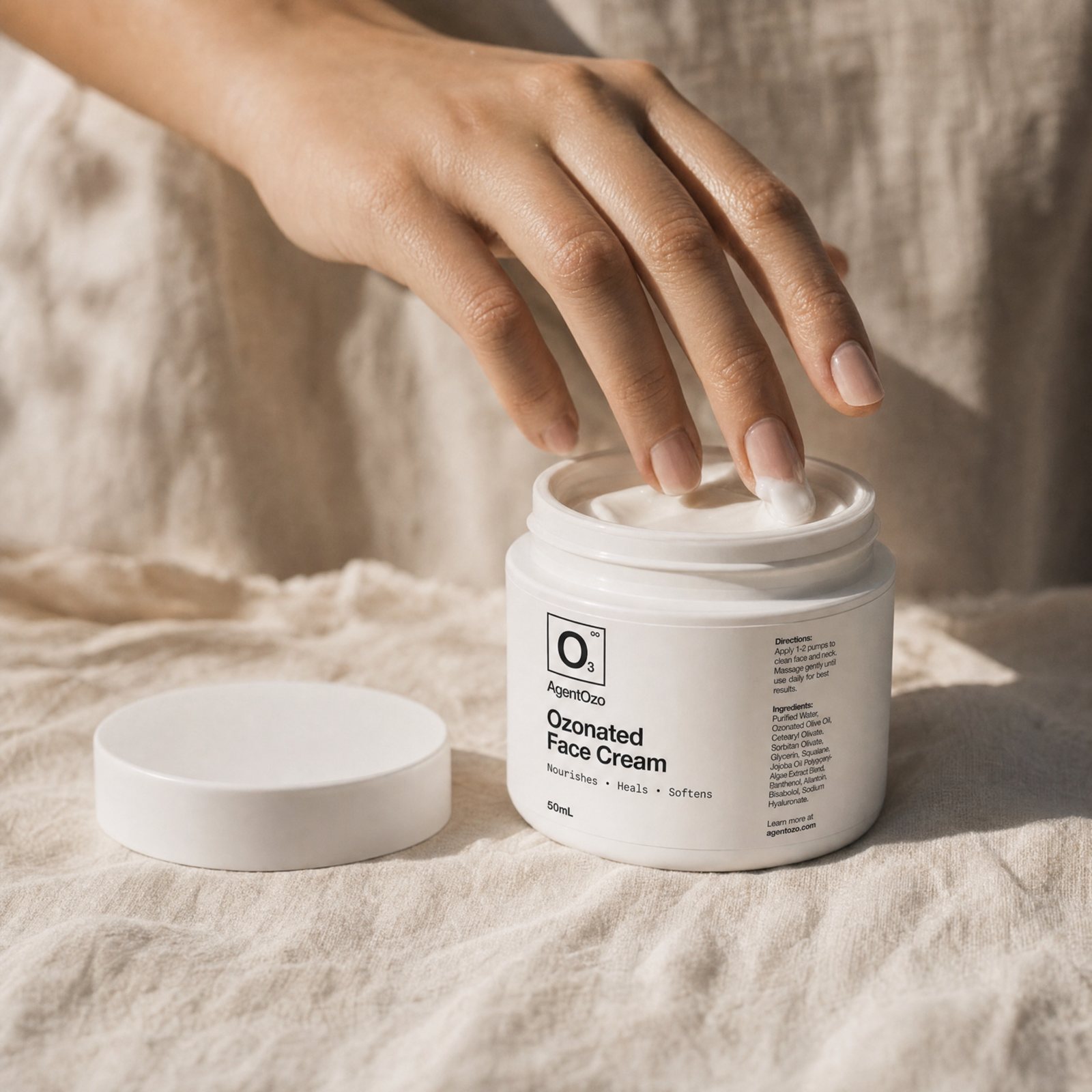
- Seal with a barrier cream. OzoMD Ozonated Face Cream over the oil at night and on its own in the morning. Niacinamide, panthenol, and hyaluronate are the three ingredients a stripped surface wants most.
- SPF every morning, over the cream. Over-exfoliated skin is more sun-reactive than usual.
Expect: stinging eases, skin may feel slightly greasy at night if you are new to oils (use less), and nothing visible changes yet. That is fine.
Days 4 to 7: moisture and patience
- Keep the four steps exactly as they are. This is the week people get bored and add a “hydrating” serum. Do not; many contain humectants at a concentration that can sting on a thin surface.
- Do not pick or peel flakes. Let them lift on their own. If they bother you, a second pass of the oil in the morning, under the cream, softens them.
- Shorten showers and turn the heat down. Hot water undoes an evening of care in two minutes. Makeup is fine if it does not sting; remove it with your gentle cleanser, not wipes.
Expect: tightness after cleansing eases noticeably, flaking starts to clear, and skin begins holding moisture for hours instead of minutes.
Days 8 to 14: settle and hold
- Stay the course. The temptation now is to declare victory. The surface is rebuilding its thickness in this window and it still needs the quiet.
- Test tolerance gently around day 12: apply your usual non-exfoliating serum to one cheek. If it stings, wait another week before reintroducing anything.
- Plan the comeback for exfoliants using the rules at the end of this article, but do not start it before day 14.
Expect: the look of redness softens, texture looks smoother, makeup sits properly, and products that stung on day one feel like nothing. For most people, day 14 is when skin feels like its old self again.
Two formulas. One 14-day recovery routine.
OzoMD Ozonated Elixir Oil and Ozonated Face Cream: physician formulated, fragrance free, non-comedogenic, made in the USA. The two steps between cleanser and SPF.
Start Your ResetHow long does over-exfoliated skin take to recover?
Most people see the look and feel settle within 14 days of stopping completely, and the surface continues to even out over the following two weeks, so four weeks is a sensible horizon before judging the result. It is individual: a single weekend of overdoing it can settle in a week, while months of daily acids may need the full month. The one variable that matters most is whether you stopped entirely or only cut back.
Mistakes that slow it down
- “Just a little” exfoliation. Once a week is still a challenge to a surface that has not rebuilt. Zero for 14 days.
- Swapping products instead of removing them. Replacing a glycolic toner with a “gentle” lactic one is still exfoliating.
- Hot water, steam, and long showers.
- Fragrance and essential oils, including the “calming” lavender and tea tree products people often reach for at this point.
- Skipping SPF because sunscreen stung on day one. Try a mineral formula over the cream instead.
- Testing new products. Recovering skin cannot tell you whether a product is good; everything stings. Test later.
- Slugging over actives. An occlusive layer over leftover retinol traps it against the skin. If you slug, do it over the oil and cream on a night with nothing else.
When to bring exfoliants back
After day 14, and only if skin has been comfortable for a full week with no stinging. Then:
- One exfoliant, not three. Pick the one that gave you the most benefit and retire the rest for now.
- One night a week for two weeks, then two nights if skin stays comfortable. Many people find two nights a week is where they should have been all along.
- Never on the same night as retinol. Alternate: exfoliant night, retinol night, then two recovery nights with the oil and cream. That rhythm is skin cycling, and it exists precisely so this does not happen again. If retinol is your main active, ozonated oil and retinol covers how the two share a week.
- Keep the recovery oil and cream as a permanent fixture, not a rescue kit. Skin that gets regular rest nights rarely ends up back here.
If stinging returns at any step, drop back for a week; you have learned where your skin’s limit is. For why oxygen-activated plant lipids suit this job, see what ozonated olive oil is and the science page; the same oil, in the 2 fl oz bottle, works on hands, lips, and heels.
See a dermatologist if skin is broken, weeping, painful, or swollen, or if nothing has improved after four weeks of a genuinely stripped-back routine. OzoMD products are cosmetics that moisturize, replenish, and comfort the feel of skin; they are not medicine.
Frequently asked questions
How do I know if my skin is over-exfoliated?
Look for tightness after cleansing, a shiny or waxy look that is not glow, flaking around the nose and mouth, stinging from products that never stung before, the look of redness that lingers, and skin that feels dry yet looks oily. If several appeared together after a run of acids, retinoids, or scrubs, over-exfoliation is the likely cause.
How do you fix over-exfoliated skin fast?
Stop every exfoliant completely, cut the routine to a gentle cleanser, a fragrance-free recovery oil, a barrier cream, and SPF, and give it 14 days. Stinging usually eases within 72 hours; the surface needs the full two weeks to rebuild. No product shortens that; only habits lengthen it.
How long does over-exfoliated skin take to recover?
Most people see the look and feel settle within 14 days of stopping completely, with texture and tone continuing to even out over the following two weeks. A single weekend of overdoing it may settle in a week; months of daily acids may need a full month.
Should I stop retinol if my skin is over-exfoliated?
Yes, for the 14-day recovery period. Retinoids speed up turnover just as acids do, and a thinned surface cannot tolerate either. Bring retinol back after day 14, one night a week, and never on the same night as an exfoliant.
Can I use ozonated oil on over-exfoliated skin?
Yes, once skin is intact, as the recovery step at night. OzoMD Ozonated Elixir Oil is fragrance free and non-comedogenic, and it replenishes the lipids exfoliants strip away. Patch test first, use two to three drops, and seal with a barrier cream. Do not apply it to broken skin.
Should I moisturize over-exfoliated skin more often?
Twice a day with a barrier cream is enough; piling on more products does not speed recovery and often adds ingredients that sting. What helps more than frequency is removing every exfoliant, lowering the water temperature, and sealing a recovery oil under the cream at night.